HR & Labor Compliance
How to Write Up an Employee
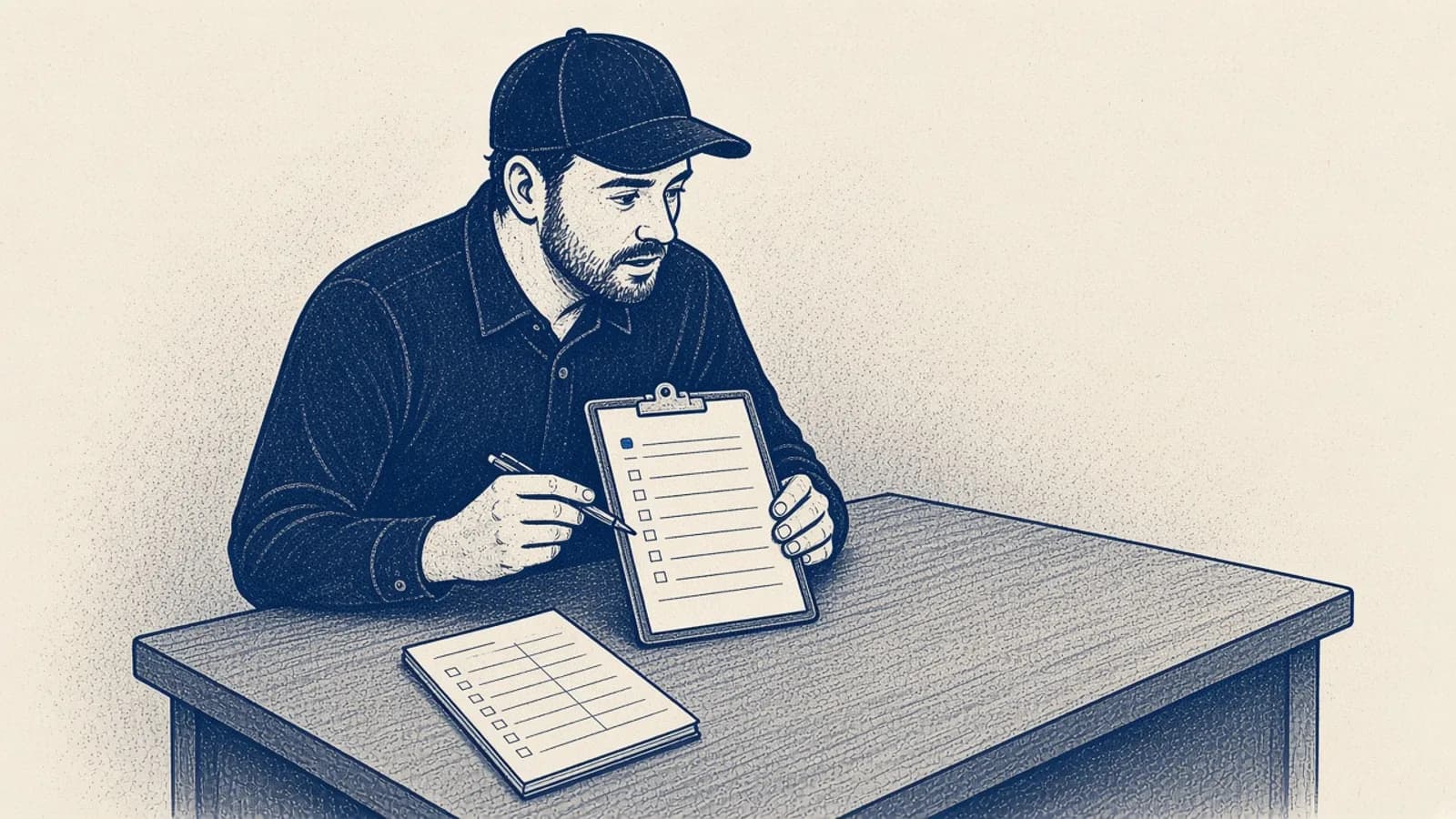
Key takeaways
- To write up an employee, write it the same shift.
- Record what happened as a camera would have seen it (words, times, actions), cite the policy section, and list any prior coaching or warnings with dates.
- Then state the action level, the expected change, a follow-up date, and the next step if it continues.
- Deliver it privately, record the employee's response, and file the signed copy.
- The signature confirms receipt, not agreement.
- A write-up is the last page of a story that should already be on file.
In this guide
To write up an employee, write it the same shift. Record what happened as a camera would have seen it (words, times, actions), cite the policy section, and list any prior coaching or warnings with dates. Then state the action level, the expected change, a follow-up date, and the next step if it continues. Deliver it privately, record the employee's response, and file the signed copy. The signature confirms receipt, not agreement.
A write-up is the last page of a story that should already be on file. If the coaching notes came first, the meeting is short and the document doesn't read like a reaction. This guide gives you the steps, a sample, what to do if they won't sign, and the right page for each kind of incident.
How to write up an employee in 7 steps

1. Check what's already on file
Pull the prior coaching notes and warnings for this issue, with dates. If there aren't any, ask whether this should be documented coaching first. The exception is serious misconduct your policy treats as zero-tolerance, like theft or violence. A first written warning with nothing before it is fine when the policy says so. A final warning with nothing before it is a jump.
2. Write it the same shift
Date it with the date and time of the incident, not the day you got around to typing. A write-up for a Saturday incident written on Tuesday has fuzzy times and reads like a reaction to something else. If you really can't do it on shift, note the date you documented it and why.
3. Describe what a camera would have recorded
Words, times, actions. No conclusions about character.
- Weak: "Jordan is always late and doesn't care about the team."
- Usable: "Scheduled 5:00 p.m. on March 4. Clocked in 5:18 p.m. per POS export. No call or text before shift. Third late arrival since February 21."
The second version can be checked line by line. The first one is an opinion. For the full rewrite table, see how to write up a restaurant employee legally.
4. Cite the policy
Use the section number and title: "Handbook 4.2, Attendance and Punctuality." A write-up with no policy behind it reads as personal. Make sure the employee's signed handbook acknowledgment is on file.
5. List prior documented steps in date order
"2/21: documented coaching, late arrival. 2/28: verbal warning documented, late arrival." This is what makes today's step look like a ladder instead of a jump. Only list steps that were actually documented. Never add one after the fact.
6. State the action level, the expectation, the follow-up date, and the next consequence
Name the level (documented coaching, written warning, final written warning). Say exactly what has to change: "Clock in by scheduled start for every shift." Set a review date. State what happens if it continues, per your policy and nothing beyond it.
7. Deliver it privately and file it
- Meet in private, with a second manager present if you can.
- Walk through it. Don't debate it.
- Record the employee's response in their own words, or note that they declined to respond.
- Ask for a signature that confirms receipt, not agreement.
- Give the employee a copy. File the original.
What to include: the fields checklist
| Field | What goes in it | In the generator's checklist |
|---|---|---|
| Employee, role, location | Name, position, store or department | Yes, required |
| Date and time | When the incident happened, not when you wrote it | Yes, required |
| Observable facts | What was said and done, by whom, at what time | Yes, required |
| Impact | What it cost the shift, the guest, or the team, in numbers where you can | Yes |
| Policy cited | Handbook section number and title | Yes, required |
| Prior steps | Earlier documented coaching or warnings, with dates | Yes |
| Action level | Coaching, written warning, final written warning, suspension, separation | No, it's a field on the form |
| Expectation and follow-up date | The specific change and when you'll review it | Yes (follow-up date) |
| Employee response | Their words, or "declined to respond" | Yes |
| Witnesses or MOD | Who was there or on duty | Yes |
| Signatures | Employee and manager, plus a "declined to sign" line with witness initials | No, they're lines on the printed document |
Build a general-purpose version with the free employee write-up generator. It keeps employee details in your browser, previews the result as you type, and asks for an email only when you choose to copy or print/save the completed document.
A sample write-up (restaurant)
Hypothetical names and details. The structure matches the generator's output.
EMPLOYEE WRITE-UP — WRITTEN WARNING

Employee: Jordan Lee          Role: Server
Location: Main St             Manager on duty: Dana Ortiz
Date of incident: March 4     Time of incident: 5:18 PM
Incident type: Attendance     Witnesses: Sam Patel (shift lead)

WHAT HAPPENED (OBSERVABLE FACTS)
Scheduled 5:00 PM. Clocked in 5:18 PM per POS labor export.
No call or text to the store or the MOD before shift.

BUSINESS AND GUEST IMPACT
Section 3 (5 tables) unstaffed 5:00–5:18 PM. Sam covered and
the host held two walk-in parties for about 10 minutes.

POLICY REFERENCE
Handbook 4.2, Attendance and Punctuality.

PRIOR DOCUMENTED STEPS
2/21 – Documented coaching, late arrival (12 min).
2/28 – Verbal warning documented, late arrival (22 min).

ACTION TAKEN
Level: Written warning.
Expectation: Clock in by scheduled start for every shift.
Next step if it continues: Final written warning, per 4.2.

EMPLOYEE RESPONSE
"My car wouldn't start. I should have called."

FOLLOW-UP
Review attendance on March 25.

ACKNOWLEDGEMENT
My signature confirms this document was reviewed with me.
It does not require me to agree with it.
Employee: __________  Date: ______
Manager:  __________  Date: ______
[ ] Employee declined to sign. Manager initials: ____
    Witness: __________  Date: ______
The same structure works outside a restaurant. A retail version:
WHAT HAPPENED: 6/12, 2:40 PM. Left register 2 open and unattended
for 9 minutes (camera timestamp) to take a personal call.
POLICY: Handbook 6.1, Cash Handling.
PRIOR STEPS: 5/30 – documented coaching, same issue.
What not to write
- Labels. "Bad attitude," "lazy," "unprofessional." Write the behavior instead.
- Medical guesses. "Seems depressed," "probably has ADHD." That's speculation about a disability. The ADA limits disability-related inquiries and requires employers to keep medical information confidential (EEOC guidance).
- Protected-class commentary. Nothing about race, color, religion, sex, national origin, age, disability, or genetic information (EEOC).
- A response to a complaint. If the employee recently complained about discrimination or asked for an accommodation, talk to HR or counsel before you deliver anything. Punishing someone for that is retaliation (EEOC).
- Threats beyond policy. "One more and you're done" when the policy says final warning.
- "This stays between us." It's going in the file. Don't promise otherwise.
- Backdating. Date the incident accurately and date the document when you wrote it.
- Three incidents in one memo. One incident per write-up. Earlier events go in prior steps.
The legal write-up guide has the full table for stripping emotion out of the language.
If the employee refuses to sign
They can refuse, and the write-up still stands. Note "employee declined to sign" with the date, have a second manager or witness initial it, give the employee a copy, and invite a written response to attach. A signature line that says it confirms receipt, not agreement, makes refusals less likely.
What official and HR guidance says:
- Note the refusal on the form. The Texas Workforce Commission's employer guide says that if an employee refuses to sign a warning, "the employer or a witness should indicate that on the form," give the employee a copy, and keep the original in the personnel file (TWC). Its sample warning includes a line saying the signature doesn't necessarily mean the employee agrees, only that they've seen it, with "I agree" and "I disagree" spaces to sign (TWC sample). The guide suggests that choice so an employee who signs either line can't credibly claim they never saw the warning (TWC).
- Use a witness and invite a rebuttal. SHRM quotes employment attorney Robin Shea: with a witness present, have the employee acknowledge you went over the discipline, then sign and date a note like "Met with employee on [date] and discussed the above. Employee declined to sign." She also advises encouraging a written rebuttal and attaching it to the form, rather than insisting on a signature (SHRM).
- Don't threaten termination over the signature. HR Source suggests a better response is: "That's fine – I will document the fact that you refused to sign. The warning still stands and will be placed in your personnel file" (HR Source).
Some employers treat a refusal as its own policy issue. Whether and how you can do that depends on your state and what's being signed, so check your state labor agency and counsel before you go there. This isn't legal advice.
Verbal, written, final: where this write-up sits
| Level | What it is | Guide |
|---|---|---|
| Verbal warning (documented) | A conversation about a specific issue, written down the same day with the date, the expectation, and a follow-up | Verbal warning documentation |
| Written warning | A signed document citing policy and prior steps, with a stated next consequence | This page, and the restaurant employee write-up |
| Final written warning | The last step before separation, with a measurable standard and a review date | Final written warning |
Some policies add a suspension between final warning and separation. See the restaurant suspension notice. For how the levels fit together, read the progressive discipline policy guide.
Restaurant write-ups by incident type
| Incident | Page |
|---|---|
| Tardiness | Restaurant tardiness write-up |
| No-call/no-show | Restaurant no-call/no-show write-up |
| Attendance pattern | Restaurant attendance write-up |
| Leaving early or extended break | Restaurant leaving-early write-up |
| Cell phone | Restaurant cell-phone write-up |
| Rude to a guest | Restaurant rude-to-guest write-up |
| Dress code | Restaurant dress-code write-up |
| Insubordination | Restaurant insubordination write-up |
| Social media | Restaurant social media write-up |
| Theft | Restaurant employee theft write-up |
| Tip theft | Restaurant tip-theft write-up |
| Food safety | Restaurant food safety write-up |
| Cash drawer shortage | Restaurant cash drawer shortage write-up |
| Void or comp abuse | Restaurant void and comp abuse write-up |
For attendance policy, points, and what never counts, see how to document employee attendance issues. The floor-level file review is the restaurant employee documentation checklist. File the signed copy using the personnel file checklist. The product that holds the timeline is employee documentation software. For a blank form and action levels, use the restaurant disciplinary action form. The void and comp method, including what to capture on the check, is in void and comp abuse documentation.
Where Docu-Coach™ fits
The write-up is easier when the coaching notes already exist. Docu-Coach™ is the manager memory system. It started in Nashville restaurants, where coaching notes kept disappearing between shifts.
- Tap Record and speak for about ten seconds. The note lands on that person's timeline with a category and a follow-up if you set one.
- HR Ready compiles a chronology with source links from the records you already saved. It doesn't recommend discipline.
- AI drafts, including HR summaries and PIPs, are unlimited on the Manager plan ($9.98/month for up to 25 people) and 2 a month on Free.
Docu-Coach™ isn't legal advice and doesn't decide discipline. Start the 30-day free trial, no card required.
Write the next one the same shift
Build today's write-up with the free generator. Then start the 30-day free trial of Docu-Coach™, no card required, so the coaching notes are already on file before the next one.
Frequently Asked Questions
What should a write-up include?
The employee, role, and location; the date and time of the incident; what was observed, in behavior terms; the impact; the policy section; prior documented steps with dates; the action level; the expectation and follow-up date; the employee's response; witnesses or the manager on duty; and signature lines, including one for "declined to sign."
What shouldn't you write in a write-up?
Labels like "lazy" or "bad attitude," guesses about medical conditions, comments about protected characteristics, threats that go beyond your policy, promises that it stays private, and anything backdated. Keep it to one incident per document.
Does the employee have to sign a write-up?
No. The signature only confirms they received it. If they refuse, note "employee declined to sign" with the date, have a witness initial it, give them a copy, and invite a written response. The write-up still stands.
What's the difference between a verbal, written, and final warning?
A verbal warning is a conversation, documented the same day. A written warning is a signed document citing policy and prior steps. A final written warning is the last step before separation and sets a measurable standard and a review date. Your policy defines the order.
How many write-ups before termination?
Whatever your policy says. A common ladder is documented coaching, written warning, final written warning, then separation, sometimes with a suspension in between. What matters is that you follow the same ladder for everyone and that each step is on file with a date.
Is there a free employee write-up generator?
Yes. The [Docu-Coach™ employee write-up generator](/tools/employee-write-up-generator) lets you preview a general-purpose write-up in your browser, then enter an email to unlock copy or print-to-PDF export. Employee details stay in your browser.
Related Resources
Restaurant Employee Documentation Checklist
The same-shift restaurant file: acknowledgments, attendance vs the schedule, alcohol, cash, and guest complaints, ready before a hearing.
9 min read · September 2026
Employee Write-Up Examples
Employee Write-Up Examples for operators and HR. Step-by-step guidance, legal risk, examples, and best practices.
3 min read
Restaurant No-Call No-Show Write-Up
How restaurant managers document a no-call/no-show the same day, write it up in FACT language, and keep progressive discipline ready for an unemployment hearing.
8 min read · September 2026
Restaurant Tardiness Write-Up
How restaurant managers write up employees for being late: clock-in vs. scheduled start, grace windows, same-day FACT language, and a tardiness pattern that survives a hearing.
9 min read · September 2026
How to Defend an Unemployment Claim
How to Defend an Unemployment Claim for operators and HR. Step-by-step guidance, legal risk, examples, and best practices.
2 min read
How Restaurants Lose Unemployment Claims Due to Poor Documentation
Restaurants lose UI claims when they cannot prove misconduct with dated records—not when they lack a lawyer. Build the documentation pack hearings require.
5 min read · September 2026